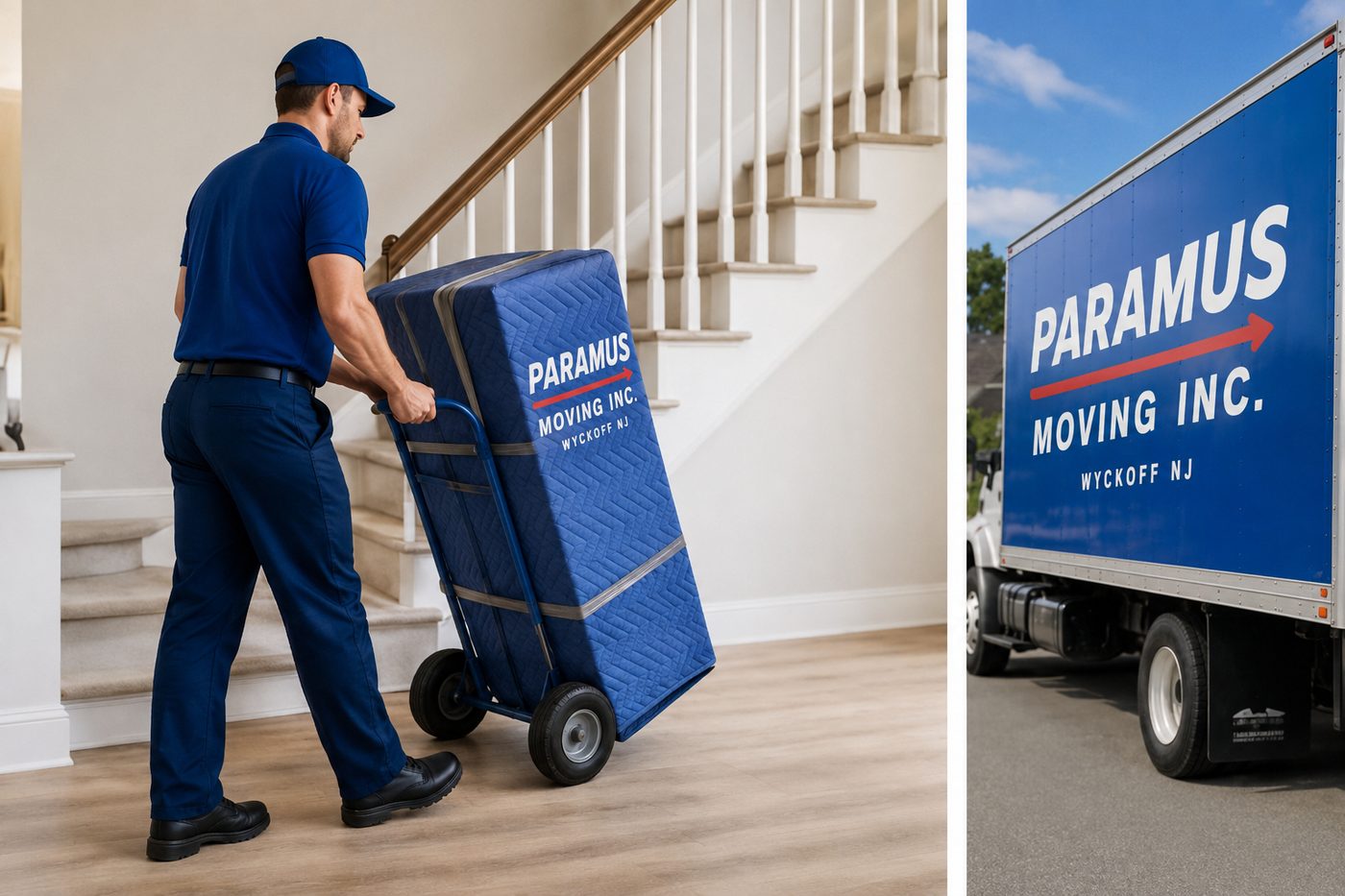
A move from Wyckoff to Waldwick and a move from Wyckoff to North Carolina involve the same trucks and the same furniture pads, but legally and logistically they are different animals. Crossing a state line moves your relocation from New Jersey’s rules into federal territory, changes how the job is priced and scheduled, and raises the stakes on choosing the right company. If an out-of-state move is on your horizon, here’s what genuinely changes—and what to verify before you sign anything.
Different rules govern the move
Local moves within New Jersey are regulated by the state through the Division of Consumer Affairs, which licenses movers and sets rules—including the requirement that estimates be written, which is why every legitimate New Jersey mover offers them. Interstate moves fall under federal law, overseen by the Federal Motor Carrier Safety Administration. An interstate mover must hold federal operating authority and a USDOT number, and you can—and should—look any company up yourself. The FMCSA’s Protect Your Move site lets you verify a company’s registration and complaint history in about two minutes, and it’s the single best free tool a moving customer has. For the state side, the New Jersey Division of Consumer Affairs is the place to check a mover’s state license.
Carrier or broker: the question most people never ask
When you look a company up, one field matters more than the rest: is it a carrier or a broker? A carrier owns the trucks and employs the crews that actually perform your move. A broker sells your move and hands it off to whichever carrier takes the job—meaning the company you researched, spoke with, and trusted may not be the company that shows up. Plenty of interstate moving horror stories begin with a customer who didn’t realize they’d hired a middleman. Paramus Moving is a carrier—USDOT 821492, NJ license PM 001009—so the people who estimate your move and the people who load your truck work for the same family company. Whoever you hire, ask the carrier-or-broker question directly and check the answer against the federal database. Our guide to spotting a rogue mover in New Jersey goes deeper on the warning signs.
Paperwork and valuation work differently
Interstate moves come with federal paperwork designed to protect you: movers must give you a written estimate, a copy of the FMCSA booklet Your Rights and Responsibilities When You Move, and a bill of lading—the contract for the shipment. You’ll also choose a valuation level for your goods, which is the mover’s level of liability if something is damaged. Read those choices carefully rather than initialing on autopilot; the default option and the fuller-protection option are meaningfully different, and the estimate meeting is the right time to ask questions. Also review the list of non-allowables—items that can’t go on a truck at all, like propane tanks, aerosols, and other hazardous materials. On a multi-day interstate haul, that list matters even more than it does locally, and perishables plus irreplaceables—documents, jewelry, medications—should travel with you regardless.
Timelines stretch, so plan differently
A local move happens in a day. An interstate move has a pickup date and then a delivery window—a spread of days during which the truck arrives, dependent on distance and routing. That window is normal and should be stated in your paperwork, but it means you plan for a gap: pack suitcases as though for a trip, keep essentials and a first-night kit in your car, and make sure someone can receive the truck at the destination on any day in the window. Start the whole process earlier than you would locally—several weeks at minimum, more in summer—because long-distance schedules are built further in advance and the good pickup dates go first, especially at month-end. Our moving checklist covers the fuller timeline.
Choose once, choose carefully
The gap between a good interstate move and a bad one is wider than for any local job, and almost all of it is decided before moving day—in who you hire and what you sign. Verify the license, confirm you’re dealing with a carrier, get everything in writing, and be suspicious of any estimate that arrives sight-unseen without anyone looking at your actual belongings. We’ve been taking Bergen County families across state lines for a long time through our long-distance moving service, and the process always starts the same way: a free written estimate, in your home or virtually by video or photos, as New Jersey law requires. Call (201) 652-5554, tell us where you’re headed, and we’ll walk you through exactly how your move would run—window, paperwork, and all.
Moving in Bergen County? Free written estimate — in person or by video.
Get my free estimate Call (201) 652-5554